Why Give?
Across the world, people live with vastly different opportunities. Some have access to safe housing, clean water, education, healthcare and financial security. Others struggle to obtain even the most basic necessities. These differences are not always the result of individual choices or effort. Often, they arise from circumstances beyond a person's control — including where they were born. So what responsibility do those of us with greater resources have towards those with less?
The Ideas of Peter Singer
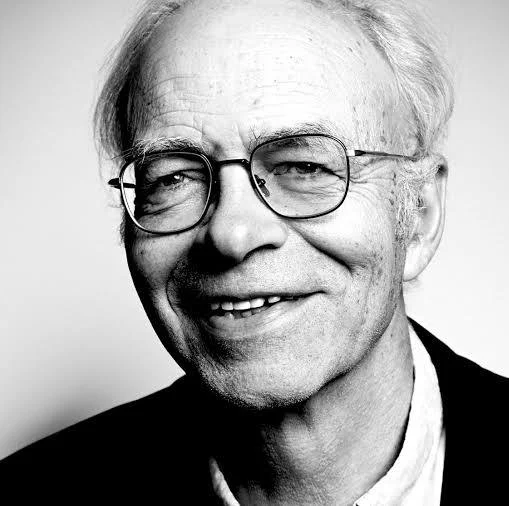
Australian philosopher Peter Singer has spent much of his career examining the responsibilities of people who have more than they need towards those who do not have enough. His central argument is simple: if we can prevent serious suffering without giving up something equally important, we have a moral responsibility to help. Many of us have resources beyond what we need for a secure and comfortable life. We spend money on conveniences, luxuries and things that provide relatively small improvements to our wellbeing. At the same time, other people lack food, clean water, shelter, healthcare and opportunities that could substantially improve their lives.
Singer asks us to consider whether spending money on things we do not really need can be justified when those same resources could prevent serious suffering. His argument challenges the idea that giving is simply an optional act of generosity. When we have more than we need, we should seriously consider how much of that surplus we ought to give to people who have less than they need.
Giving as a Moral Responsibility
Singer argues that our responsibility to help others should not depend solely on personal generosity or charitable feeling. It arises from the difference between what our resources mean to us and what they could mean to someone experiencing serious deprivation. A relatively small sacrifice by someone who is financially comfortable may make an enormous difference to another person's life. This does not mean that everyone must give away everything they own or place themselves and their dependants in hardship. It does mean questioning where reasonable personal needs end and unnecessary consumption begins. Singer's philosophy challenges us to think carefully about how we use the resources available to us.
If we have enough to live well, and some of what remains could substantially improve another person's life, what responsibility do we have to share it? This is one of the fundamental questions behind Project Earth.
Giving Effectively
Singer also argues that good intentions are not enough. In The Life You Can Save and The Most Good You Can Do, he encourages people to consider the actual results of their giving. A contribution should be judged not only by the generosity of the donor, but by the difference it makes. This means asking practical questions:
- What problem are we trying to solve?
- What does the community itself identify as necessary?
- How will the resources be used?
- Can we see evidence of progress?
- Will the benefits continue after the initial contribution?
These questions help turn a desire to help into meaningful action.
Why Project Earth?
Project Earth is built around a simple idea: people should be able to help other people, wherever they live, through practical projects that respond to real community needs. Our approach connects people who want to contribute with communities and project sponsors who are working to create change. We believe effective giving should involve:
Community leadership: Projects should respond to needs identified and supported by the people affected.
Transparency: Contributors should be able to understand what a project intends to achieve and how it progresses.
Accountability: Project planning, approvals and delivery should be subject to appropriate review.
Practical outcomes: Success should be measured by the benefits delivered, not simply the amount contributed.
Lasting value: Wherever possible, projects should create opportunities and benefits that continue into the future.
Project Earth draws inspiration from Singer's ethical challenge, while recognising that meaningful change requires community participation, sound project management and respect for local priorities. We cannot solve every problem individually. But we can choose whether to respond to the problems we are capable of addressing. Giving may involve money, knowledge, professional skills, time, equipment or simply helping others bring a worthwhile project to life. The question is not only how much we can give. It is what we can achieve together.
Why Projects?
Making a Lasting Difference
Giving someone food or money can help them today. But building a water supply, a school, a health clinic or a solar power system can help an entire community for many years. Projects turn donations into things that people can use, share and benefit from.
More Value for Everyone
A single project can create many benefits. For example, a clean-water supply can improve health, save families time and help children attend school. A solar power system can reduce fuel costs and free up money for other community needs. This is how a project can create much more value than the money spent building it.
Building Something That Lasts
A good project continues to help people long after the original donation has been spent. It can also create jobs, teach skills and help communities become more independent. That is why Project Earth focuses on projects that communities genuinely need and can maintain.
Knowing Where the Money Goes
Projects also make it easier to see how contributions are being used. Each project can have a clear plan, a budget and defined goals. Spending can be checked against invoices, contracts and completed work. These checks help reduce waste, mistakes and opportunities for fraud. Project Earth's planned financial system is designed to make payments traceable and properly authorised. These payment controls are not yet operating in the current pilot.
Seeing the Results
We want people to see what their contributions achieve. Not just how much money was raised, but what was actually delivered and how people's lives improved. A completed classroom matters because children can learn in it. A water system matters because families have clean water. The real measure of a project is the difference it makes to people's lives.
Working Together
One person may not be able to build a school or provide electricity to a village. But many people contributing what they can may make it possible. Project Earth brings together communities, donors, sponsors and people with useful skills to turn good ideas into practical results.
Further Reading
Peter Singer, Famine, Affluence, and Morality (1972).
Peter Singer, The Life You Can Save (2009; revised edition 2019).
Peter Singer, The Most Good You Can Do (2015).